
Why furniture makers price by the piece, not the board foot
Furniture sells by the piece, because two tables with the same board feet of walnut can take very different hours, so board feet are for buying lumber, not for setting the price.
A board foot is 144 cubic inches: 1 inch thick, 12 inches wide, 12 inches long. A board 1 inch by 6 inches by 8 feet is 4 board feet, so at $10 a board foot it costs $40. That math belongs on your price list, next to the date you last paid it.
The price itself follows the hours. Breadboard ends, a curved apron or a figured slab add bench time without adding much wood, so a per-board-foot price would lose money on exactly the pieces customers want most. Keep lumber honest by logging what you actually paid on each receipt, so you never quote wood from memory.
What a walnut coffee table for a designer came to
The sample walnut coffee table sells for $2,027 and keeps $478 above every cost, both wages included.
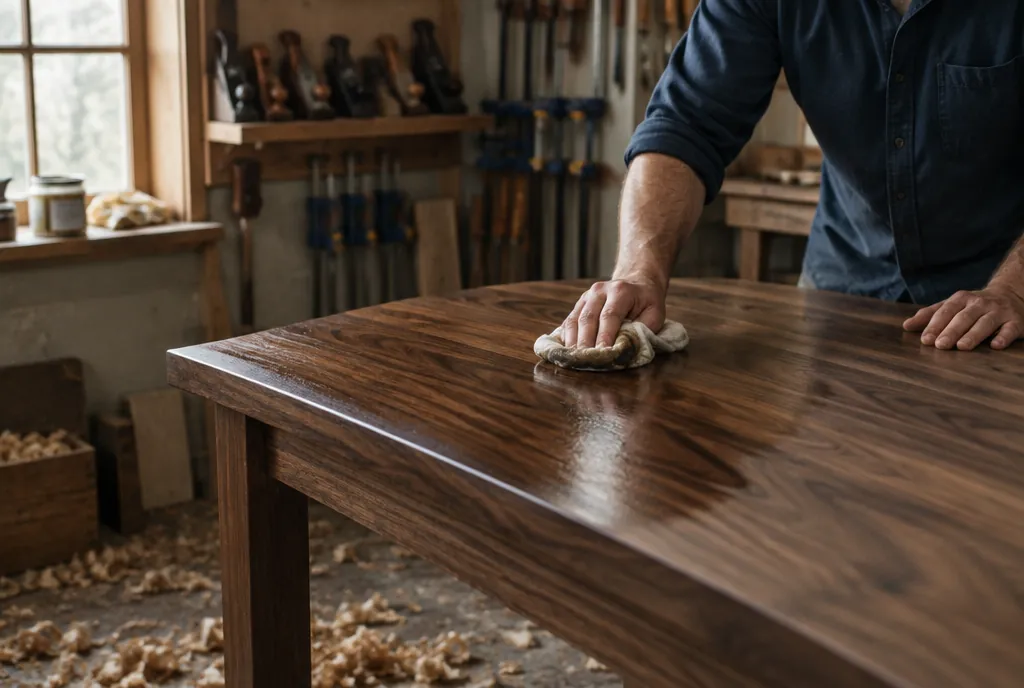
The piece is 48 by 24 by 18 inches, a solid thick-walnut top with breadboard ends, tapered legs and an oil finish, built to an interior designer's drawing and delivered.
| A | B | |
|---|---|---|
| 1 | Walnut coffee table, one piece | Amount |
| 2 | Walnut, finish, glue, sandpaper and hardware | $476.70 |
| 3 | Bench time, about 10.5 hours with machines | $626.19 |
| 4 | Hours and cash around the build (design, calls, delivery and more) | $445.86 |
| 5 | Markup on materials, safety cushion and profit | $478.41 |
| 6 | Price to the designer | $2,027 |
Full cost is $1,548.75, so the table keeps about 23.6% of the price. Counting the bench time and the hours around it, the table takes about 17 hours and earns about $87 per labour hour against a break-even of $58.29.
Does a flat hourly rate plus 50% on materials land in the same place?
Yes: a flat $75 an hour for all 17 hours, plus the materials marked up 50%, comes to about $1,990, within about $40 of the sample's $2,027.
Some small furniture shops price exactly that way: one hourly rate for every hour on the piece, and half again on top of the lumber and finish to cover waste, sandpaper and the odd miscut. On the sample, that is 17 hours at $75, or $1,275, plus $476.70 of materials times 1.5, or about $715.
Two different methods landing on nearly the same price is a good sign the table isn't underpriced. The catch is the $75. That figure only works if it is built from your own shop's overhead and billable hours; a shop with higher rent or fewer billable hours needs more, and a lean garage shop may need less.
How many hours of a 50-hour week can a woodworker actually bill?
Often only 30 to 35 of them, which is why a shop's rate has to sit far above what the owner pays themselves.
The rest of the week goes to buying lumber, sharpening, cleaning the shop, answering messages and paperwork. None of that is on a customer's piece, but all of it has to be paid for by the hours that are.
The sample shop, an owner and one woodworker with its overhead led by shop rent, power and dust collection, has to bring in $58.29 per billable hour to break even. An owner also pays both halves of Social Security and Medicare, about 15% of their own pay, on top of the wage. The formula is laid out once in the true hourly rate guide, and the free true hourly rate calculator runs it on your shop.
Two quick floors: materials under a third, and cost times two
Two simple checks catch most underpriced pieces: materials should be well under a third of the price, and the price should be at least materials plus labour, doubled.
The first check is materials divided by 0.3. On the sample, $476.70 divided by 0.3 is about $1,589, and the real price of $2,027 clears it. The walnut is about 23.5% of the price.
The second check doubles materials plus your wages to leave room for overhead and profit. Be careful with it: if your labour figure is already a full shop rate with overhead built in, doubling it counts the overhead twice. To keep 23.6% of the price, the sample needs about 31% on top of full cost; why those two numbers differ is in markup vs margin.
What small furniture makers charge, and why it varies so much
Prices for handmade furniture vary more than almost any other trade, because the same table can be sold to a neighbor, at a market, on Etsy or through a designer's showroom.
Makers who are starting out often sell coffee tables for a few hundred dollars, then find a designer or showroom will pay several times that for the same work. Small, repeatable pieces like stove covers or cutting boards sell for low hundreds or less, and a first build almost always sells for less than the maker would charge the second time, once they know the real hours.
Commission pieces often come in under the rate the maker aimed for, because the hours run over. That is why the sample prices the hours first and checks the per-hour earnings at the end: $87.26 per labour hour on the walnut table, against a $58.29 break-even.
Why the second table costs less than the first
Each piece gets cheaper as the order grows, because setup like dialing in the taper jig and milling the lumber happens once per batch.
The file prices the same walnut table at four quantities with the same rules:
| A | B | C | |
|---|---|---|---|
| 1 | Tables ordered | Price each | Order total |
| 2 | 1 | $2,027 | $2,027 |
| 3 | 2 | $1,734 | $3,467 |
| 4 | 4 | $1,587 | $6,347 |
| 5 | 8 | $1,513 | $12,108 |
The first one always takes the longest. Once you have built a piece and kept notes, the second can take much less time. Price the first piece from honest hours, then let the setup drop out on repeat orders. That way you can answer the designer's question about four matching tables on the spot.
Design time, lumber runs and the board that splits
The hours and small cash around the build add about 29% to the sample table's cost, and leaving them out would cut the price by about a quarter.
These are the lines the Quote tab asks about on every piece:
- Design, drawing and cut list. When a customer sends a photo of a table they like, the first job is to pin down the width, height and depth, because that decides the lumber. That back-and-forth is unpaid unless it's on the quote.
- The lumber yard trip and picking boards. Hours nobody pays for directly. The sample leaves this line as No on purpose, so you can see the file flag it.
- The finish sample board. A scrap with the proposed oil or stain, approved before the tabletop gets finished.
- The wrong cut or the extra stick of lumber. Every maker has a project where they forgot a board or cut one short. A materials markup is partly there for that.
- Photos and video. Good photos are how custom work sells, and makers who struggle to raise prices often have weak photos or none.
- Delivery. Blankets, wrap, loading, the drive and carrying a heavy walnut table into the right room.
- Etsy and card fees, when the order comes through a platform.
- Changes after the drawing is approved. A customer who wanted a five foot table and now wants six feet.
A longer table means new lumber and a second glue-up, so it belongs in a written change order priced at the same rate.
Discounts, "I wouldn't pay that" and other ways makers underprice
Most underpriced furniture comes from pricing by what the maker would pay, discounting on request, or guessing the hours on a first build.
Pricing by your own wallet. You are not your customer. Plenty of makers have sold a lot of pieces at prices they would never pay themselves.
Knocking money off on request. Taking money off the top teaches a customer to ask every time. Offer to change the design to fit the budget instead: a simpler edge, a smaller size, a less costly wood.
Materials times two. It fails fast on small pieces. A birdhouse with $6 of materials would sell for $12 after an hour of work, which pays nothing for the hour.
Guessing the hours. A first build nearly always takes longer than planned. Write down the real hours on every piece; job costing is how the next quote gets closer. A firm number for the approved drawing is different from a rough figure off a photo, which is explained in quote vs estimate.
How the shop's yearly overhead lands on each piece is covered in overhead and profit. The Woodworking & Furniture Pricing Calculator does every step above in Excel or Google Sheets, from lumber by the board foot to quantity pricing and a customer quote with furniture terms, and its Job Log shows which pieces made money.