
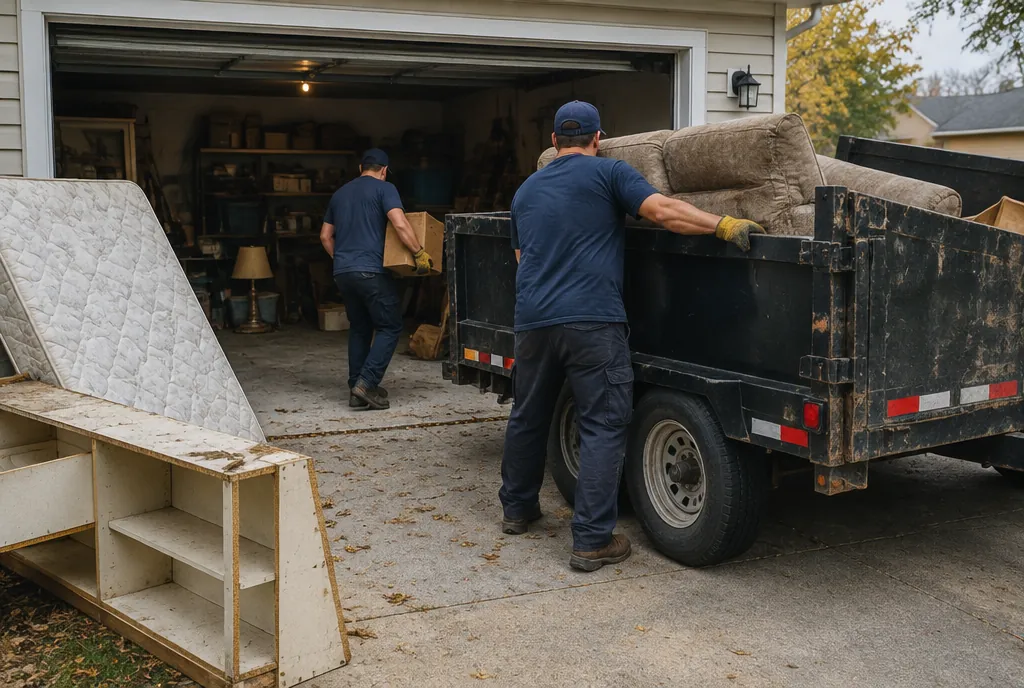
Why haulers sell by the quarter load, not the hour
Customers can picture a quarter, a half or a full trailer, so almost every owner we looked at sells volume and folds some loading time into it. One to two hours of loading inside a full-load price is common. Another way to tie the free time to the size of the load is 30 minutes per quarter: half an hour for a quarter load, an hour for a half, two hours for a full.
Past the included time, owners switch to the clock. One owner charges $125 an hour working alone and $175 an hour with a second person. That split matters, because some full loads take 30 to 40 minutes and others take five or six hours while the customer picks through things.
What does a full trailer load have to pay for?
A load price has to cover four things: the dump bill, the crew's hours, the truck and trailer, and a profit you choose. The dump bill is the hauler's version of materials. Start by collecting the price sheet from every dump and recycler nearby, then pass every fee through to the customer.
The dump bill, by weight. A 12x6x4 dump trailer of household junk often weighs about 1 to 1.5 tons full, so a full-load dump bill barely changes from job to job. Mattresses, tires and TVs carry their own per-item fees on top. If your dump charges by the ton, pad every estimate with a ton or two of margin in case the load is heavier than it looks.
The crew's hours. Drive out, walk-through, carry and load, sweep, then the dump run with its weigh-in. Every one of those is paid time for two people.
The truck and trailer. Charge them for the hours they are out on the job, so payments, tires and fuel land on the loads that wear them out.
Profit. A common starting rule for beginners is to add up the job's full cost, labour and truck included, and double it. That gives a 50% margin on paper.
Doubling only works when your own wage and the overhead are already in the cost. Double the dump fee and the gas alone and you are loading for free.
What an hour of loading costs a two-person crew
In the example company, each crew hour on a paid job costs $52.44 per person, so two people need about $105 an hour just to break even. That figure is the year's overhead ($22,900 in total for insurance, marketing, truck parking and the rest) plus both people's full pay, spread over only the hours that are on jobs.
Billable time is the part junk owners overestimate. Estimates, photo quotes over text, trailer repairs and slow days all come out of the year, and most small haulers have some days with no revenue at all. The owner's own pay belongs in the rate too, or the "profit" at year end is just your wage arriving late. The true hourly rate guide walks through the formula once, and the free true hourly rate calculator runs it with your numbers.
Not every owner builds overhead in. Some price only labour, dump fees and fuel and let volume cover insurance. That can hold when the phone rings all day. For a one-trailer outfit, the example shows overhead adds only a few dollars to each billable hour, which is cheap protection for a slow February.
Compare the $175 an hour for two people above with the example crew's $105 floor: that extra-time rate clears break-even with room for the truck and profit.
The 14-yard garage cleanout, priced line by line
The worked example is a garage cleanout before the house goes on the market. It fills one 14-yard dump trailer with household junk, a mattress set and four old tires, plus cabinets to empty and a broom sweep, done by two people with one dump run.
The crew time comes to 6.5 labour hours for the main stages, and the forgotten items add 1.75 more, for 8.25 in all. Disposal and supplies take a markup, a small cushion sits on the total, and profit goes on top.
| A | B | |
|---|---|---|
| 1 | Garage cleanout, 14-yard trailer | Amount |
| 2 | Dump fees, item fees and supplies | $222.60 |
| 3 | Crew, truck and trailer | $384.71 |
| 4 | Forgotten costs (quote, scale line, cabinets, sorting) | $116.76 |
| 5 | Markup, cushion and profit | $243.91 |
| 6 | Price to the customer | $968 |
Divide $968 by 14 yards and you get about $69 a yard. The $243.91 on top of a full cost of $724.08 is about 25% of the price, and it is left after both people, the owner included, have been paid. Over the 8.25 hours the job earns about $82 per labour hour against the $52.44 floor.
Drop the forgotten items and the same rules give about $821. The $147 difference is what a hauler hands back without noticing when the scale line and the full cupboards are left off.
Full-load and quarter-load prices owners quoted
The owners we studied charge between $600 and $1,195 for a full load, depending on the size of the truck and the city. Each row is one owner's price, not a market average.
| A | B | |
|---|---|---|
| 1 | What they haul with | Price they quoted |
| 2 | 16 ft trailer, 4 ft walls | $200 quarter, $350 half, $475 three-quarter, $600 full |
| 3 | 15-yard dump truck, Central Texas | $815 full; $75 single item; $165 minimum |
| 4 | 15-yard truck, Southern California | $795 full in a suburban county; $1,195 full in Los Angeles |
| 5 | Pickup and trailer, household three-quarter load | About $300, plus $50 for a second person, sold at $350 |
| 6 | Full load, general advice | Mostly $400 to $700 |
The owner at $600 a full trailer says he is often booked out at that price and has thought about raising it. In Los Angeles, a big national franchise was about a thousand dollars for a full load, with a $200 minimum, so a small hauler there has room above the cheap end.
Price per cubic yard: where $69 sits against $30 to $80
A per-yard price is your full-load price divided by the cubic yards your truck or trailer really holds. Measure the inside length, width and height in feet, multiply, and divide by 27. Measure it yourself: a trailer sold as 8 ft wide can have a dump body only 6 ft wide inside, and pricing it as the bigger box gives away a quarter of every load.
Owners put the spread at $30 to $80 a yard depending on the area. $815 for a 15-yard truck is about $54 a yard. The example's $69 sits above that because it carries the tire and mattress fees and cabinet work, while its full cost alone is about $52 a yard.
Partial loads are where owners split. Some divide the full truck into straight quarters, so a quarter of $815 is about $204. Others charge $200 for a quarter and $600 for a full trailer, so each extra quarter is cheaper than the first. There is a good case that smaller loads should cost more per yard, because the drive, the truck and the walk-through cost the same for a quarter as for a full load; one worked version of that came to about $75 a yard full and close to $100 at a half.
Is doubling your cost a 50% margin?
Yes: doubling is a 100% markup on cost, which leaves half the price as margin. The example takes a gentler route, a 33.7% markup on full cost that keeps 25.2% of the $968, but because that cost already holds both wages and the overhead, the 25% is close to net profit.
The doubling rule usually starts from a cost that leaves out overhead and the owner's pay, so its 50% is a gross figure that still has to pay for things the example had already counted. The markup vs margin guide has the conversion table, and overhead and profit covers what a year should leave you.
Dump bills, tile in the pile and other costs that sink a load
The costs that eat junk removal profit are mostly unpaid minutes around the load, not the load itself. Each one below showed up again and again in the owner videos.
The quote that did not book. A drive-out estimate that does not book can burn $50 to $60 of gas with nothing to show for it. Photo and FaceTime quotes cost less, but they are still time, so a small line on every job lets the booked loads pay for the lost ones.
Standing in line to weigh in. The dump run is its own stage with real minutes, not just miles. The scale bill for one heavy job is often far bigger than a beginner would guess.
Full cupboards. A garage that looks like ten minutes of carrying can hide an hour of bagging jars and old cans. Charge more when cabinets are packed, and charge for bagging so loose stuff never rides free.
The customer picking through the pile. Estate cleanouts are the worst for this. The family wants one more look at every box while two people stand by on the clock, so either price the waiting in or agree that sorting happens before the crew arrives.
Tile or concrete under the junk. Ask the contractor or customer whether there is tile in the pile, because it blows up the weight after the price is agreed. A quarter load of concrete can run $500 to $600 on its own.
Item fees, stairs and distance. Tires and mattresses cost extra to dump, and it is normal to charge customers more per tire than the recycler charges you. A tight driveway or a long carry can mean bringing a second person, so raise the quote on the spot when you see it. A fuel charge once a job is outside your 10-mile area keeps far jobs from eating the day.
Loads to refuse. Fuel and fire extinguishers cost more to get rid of than any upcharge will cover, so turn them down. A mattress with bed bugs is worth about double the normal price, if you take it at all.
Where junk quotes go wrong: locked prices and $90 mattresses
The costliest junk removal mistake is a fixed price on a job nobody has fully seen. On multi-load and hoarder jobs, give yourself room in the estimate so a heavier or bigger job does not trap you at a number you cannot live with.
The example Job Log shows what happens without that cushion: an estate cleanout ran almost twice its quoted hours, the dump bill came in well over the estimate, and the job lost money. Quote a range from photos, confirm on site before loading, and price anything added on the day before it goes on the trailer, the way a change order works. The quote vs estimate guide explains the difference in writing.
The other mistake is chasing the cheapest price in town. Pricing off competitors lets the worst operators in your market set your ceiling. Mattress pickups at about $90 are a common beginner price, and being the cheapest hauler around hurts everyone, you first.
Payment timing is the last leak. Take full payment on every same-day job and split multi-day jobs into paid phases, because the dump charges your card the moment you leave.
Turn your dump tickets into a load price sheet
The Junk Removal Pricing Calculator holds your landfill rate per ton and item fees on its Price List, prices each load from crew hours and trailer time, and will not finish a quote until every forgotten-cost line is answered. After the job, log the real hours and the scale ticket; job costing explains why that one habit fixes the next quote.